My current research is focused on three areas: (1) investigating physiological responses of aquatic vertebrates during routine activities; (2) understanding the effects of anthropogenic disturbances in diving animals; and, (3) developing physiological data loggers to investigate key, previously unanswerable questions with minimal disturbance to animals.
Physiological responses during routine activities in freshwater and marine turtles
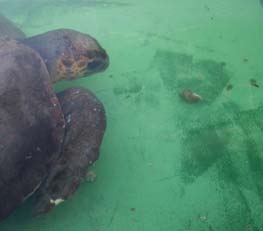 Although turtles have a well-known tolerance to hypoxia, less is known about physiological responses in freely diving turtles. Seals and penguins experience a diving bradycardia (reduction in heart rate) when submerged, while in terrestrial animals heart rate is correlated with activity level. However, in aquatic turtles, we don’t whether heart rate drops with diving or is related to activity level. Earlier studies reached opposing conclusions. These studies also had some level of disturbance to the experimental turtle. Taking a comparative approach, I study heart rate and oxygen depletion patterns in red-eared sliders and green and loggerhead turtles during routine, undisturbed activities. I studied red-eared sliders in Dr. James Hicks’ lab at UC Irvine. In collaboration with a researcher from the University of Tokyo, I deployed data loggers to measure heart rate and blood oxygen depletion on loggerhead and green turtles in Japan.
Physiological effects of anthropogenic disturbances
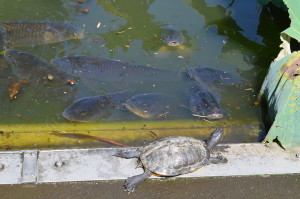
Both marine and freshwater turtles experience high mortality rates after being entangled in nets for short durations. Thousands of marine turtles are killed from incidental capture by fisheries each year. This occurs despite their tolerance to hypoxia. Investigating the physiological response to diving in turtles under routine conditions versus stressful conditions is critical to understanding the paradox of hypoxia tolerance and drowning in nets. Ultimately, this research on diving turtles will provide information to aid conservation managers.
Fiber optic O2 and Lactate sensor development: New technology to investigate the physiology of aquatic vertebrates
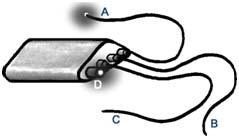
I am working with biomedical engineers at UC Irvine to develop small fiber optic oxygen and lactate sensors. The fiber optic sensors are much smaller than current oxygen electrodes and can be used with a much wider range of animals. The lactate sensor uses an enzyme-based system with a fiber optic oxygen probe.